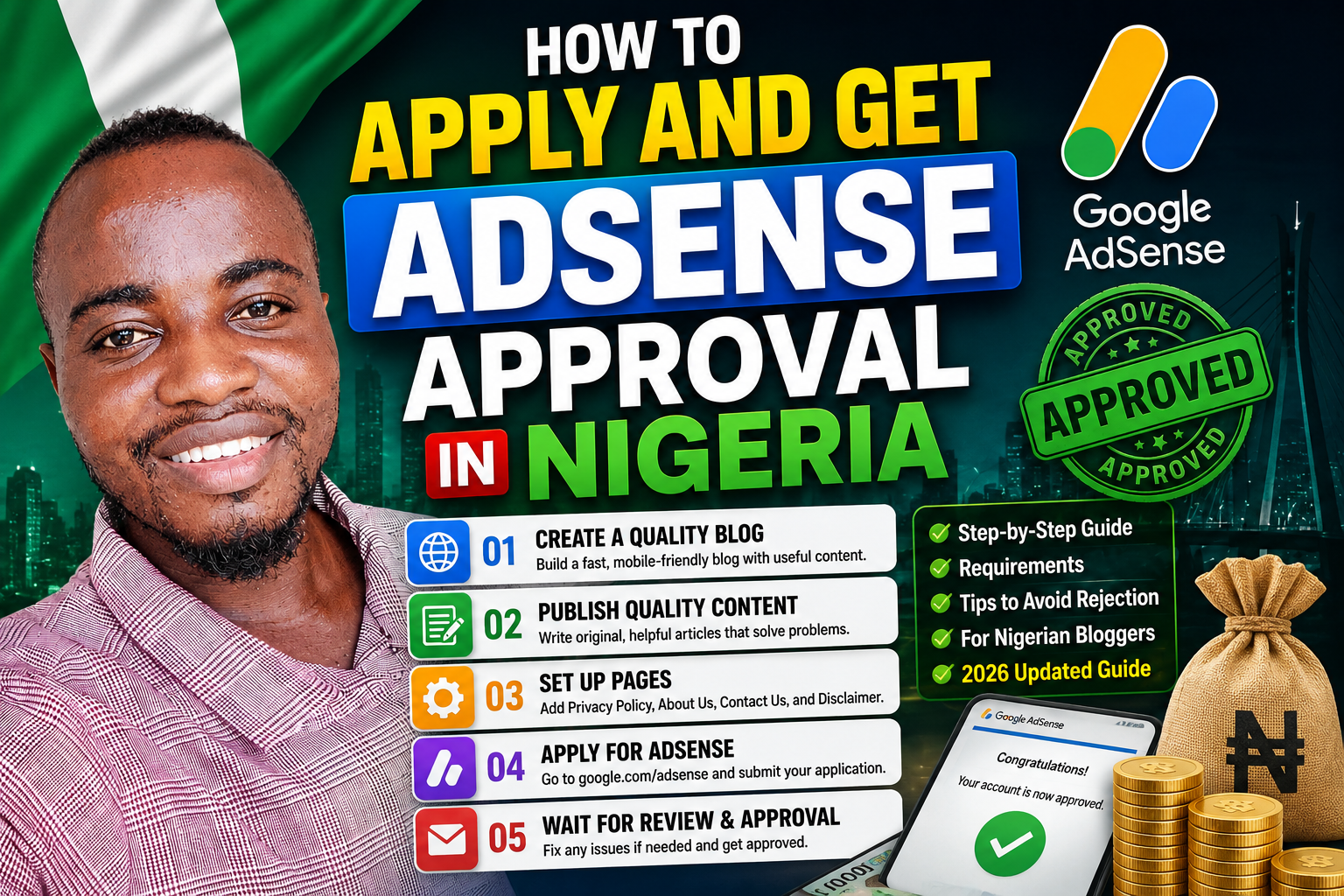
Dude…You don’t need 100 blog posts to get AdSense approval.
You don’t need six months of blogging either.
🚀 Learn AI Video Creation & Start Building Digital Skills
Want to learn how to create AI videos for YouTube, TikTok, Facebook, and other platforms? Choose an option below to get started.
🎥 Start AI Video Training 📚 Watch Free AI Lessons ⭐ Join the Premium AI Program✔ Beginner Friendly | ✔ Learn at Your Own Pace | ✔ Practical AI Video Skills
And no, Google isn’t rejecting your website simply because you’re not ranking on top 1.
The truth is, most bloggers get rejected because they apply before their website is actually ready. They rush to submit their application after publishing a few articles, hoping Google will approve them. When the rejection email arrives, they publish five more posts and apply again.
The result?
Another rejection.
I’ve seen websites with over 200 articles get rejected, while another blog with fewer than 20 high-quality articles gets approved within months.
So, what makes the difference?
It comes down to quality, trust, and user experience.
Google wants to know one thing before placing ads on your website:
“Can we trust this website enough to show our advertisers here?”
If the answer is yes, getting AdSense approval becomes much easier.
In this guide, I’ll walk you through everything you need to know—from preparing your website to submitting your application and avoiding the mistakes that cause most rejections in 2026.
Let’s get started.
What Is Google AdSense?
Before we talk about AdSense approval, let’s quickly clear something up.
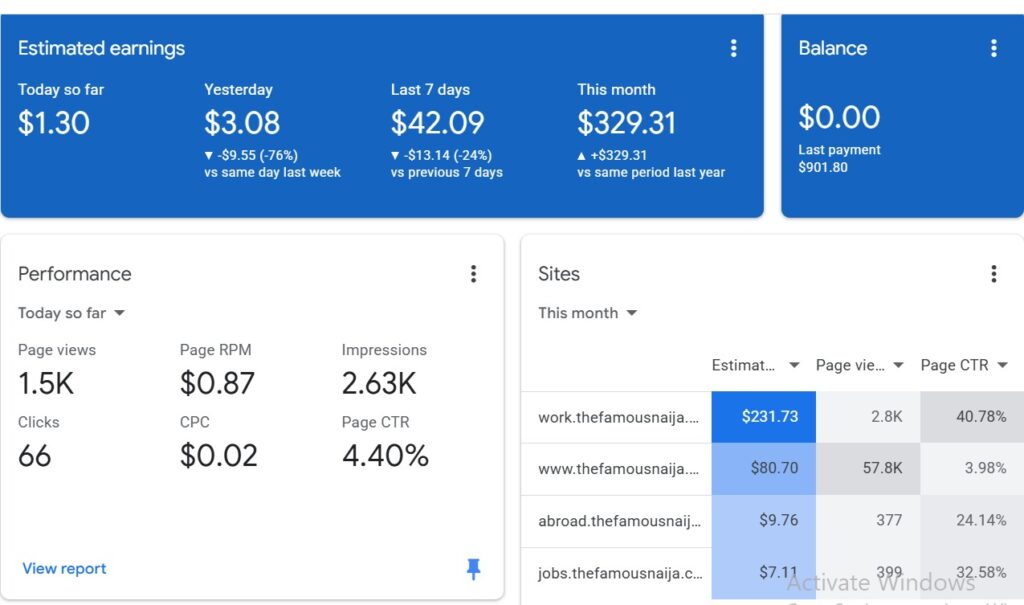
Google AdSense is an advertising program that allows website owners to earn money by displaying ads on their websites.
When someone visits your blog, Google automatically shows relevant advertisements. If visitors view or click those ads, you earn a share of the advertising revenue.
It sounds simple and it is.
But getting approved is where most people struggle.
Google isn’t just giving you permission to display ads. They’re also protecting the businesses that pay them to advertise.
Think about it.
If you owned a company spending millions of dollars on advertising, would you want your ads appearing on low-quality websites filled with copied articles, broken pages, and misleading information?
Probably not.
Google feels the same way.
That’s why they carefully review every website before granting AdSense approval.
What Google Actually Requires for AdSense Approval in 2026
Google’s official eligibility page is short. You need your own unique, interesting content that follows their policies, and you must be 18 or older. That’s it on paper.
No official minimum number of posts. No official minimum traffic. No official domain age rule for most countries, including Nigeria.
Yet almost every Nigerian who applies with five short posts and a free subdomain gets rejected. Why? Because the human (and AI-assisted) reviewers are looking for signs that your site is a real publication someone would actually visit — not a thin shell built only to show ads.
In practice, successful Nigerian applications share these traits:
- A custom domain (yourname.com or yourname.com.ng)
- 15–25 solid original articles (most people who get approved sit around this range)
- Articles that are genuinely useful — usually 800 words or more, written in your own voice
- About, Contact, and Privacy Policy pages that look real
- HTTPS, mobile-friendly design, and clean navigation
- No copied content, no pure unedited AI spam, no prohibited topics
If you get those right, your chances jump dramatically.
Step 1: Choose a Niche That Actually Works for You
This is where many young Nigerians go wrong. They pick “make money online” or “general lifestyle” because it feels broad. Broad usually means thin content that looks the same as a thousand other blogs.
Pick something you can talk about from experience or genuine interest. Examples that work well for Nigerian youth:
- Practical tech tips for Nigerian students and freelancers (data-saving apps, phone tricks, free tools)
- NYSC, JAMB, or university life guides written from real experience
- Side hustles that actually work in Lagos, Abuja, or Port Harcourt (not recycled foreign advice)
- Local entertainment, football analysis, or Nigerian music commentary
- Personal finance in Naira terms (budgeting on ₦50k–₦150k monthly income)
The tighter and more helpful your niche, the easier it is to write original content that Google’s reviewers see as valuable. You don’t need to be an expert with ten years of experience. You just need to be more helpful than the average copy-paste post.
Step 2: Set Up a Site That Looks Legitimate
Free Blogger or WordPress.com subdomains can technically apply, but custom domains get approved far more often. Register one. It costs under ₦5,000 a year in most cases.
Host it on something reliable. Slow shared hosting with frequent downtime hurts both approval chances and later earnings. Many Nigerian creators use local or African-friendly hosts that give free SSL and decent speed for the price.
I recommend DomainKing for your domains.
You can use can also Blogger (Blogspot) as your CMS why using a custom domain attach to it.
Make sure:
- Your site loads over HTTPS (the padlock must show)
- It looks good on a phone (most Nigerian traffic is mobile)
- Navigation is clear — categories, recent posts, search if possible
- There are no “coming soon,” “under construction,” or placeholder pages
Remove every default “Hello World” post and any incomplete draft that is publicly visible.
Step 3: Write Content That Passes the “Low Value” Test
This is the biggest reason for rejection in 2026. “Low value content” does not mean your English is imperfect. It means the reviewer could not see enough unique, useful material.
Here’s what works:
Write like you’re explaining something to a friend who is stuck. Use real Nigerian examples. Talk about what actually happens when you try a method in Lagos traffic or with irregular electricity. Add your own observations.
Aim for depth. A 1,200-word post that fully answers one specific question beats five 300-word surface-level posts. Include:
- Clear structure with headings
- Practical steps or examples
- Images (preferably your own photos or properly licensed ones)
- Internal links between related posts once you have enough content
About AI: You can use it as a starting point for research or outlines, but never publish raw AI output. Google’s systems detect it easily, and pure AI content is one of the fastest ways to get the “low value” rejection. Edit heavily, add personal stories, correct facts for the Nigerian context, and make it sound like you.
Publish consistently for a 30-40 day before applying.
Step 4: Create the Three Pages You Cannot Skip
Missing any of these is an almost automatic rejection.
About page Write it in first person. Who are you? Why are you writing about this topic? What can a reader expect? Keep it honest and short — two or three solid paragraphs is enough. Add a simple photo if you want.
Contact page A working contact form or a clear email address is fine. Make it easy for people (and Google) to reach you.
Privacy Policy This one is non-negotiable. It must mention that you use cookies and that third-party services (including Google) may collect data. Free generators exist, but customize the text so it mentions your site name and is not a generic template that looks copied. Link it clearly in the footer or menu.
Many people also add a simple Disclaimer or Terms page. It is not always required, but it strengthens the site’s legitimacy, especially if you write about money or health-related topics.
Step 5: The Pre-Application Checklist
Before you even open adsense.google.com, check these:
- Custom domain with HTTPS working
- 15–25 original posts that are properly finished
- About, Contact, and Privacy Policy live and linked
- Site looks complete on mobile
- No broken links or empty categories
- Content is indexed in Google Search Console (set this up early)
- You are 18 or older (or using a parent/guardian account properly)
If anything on that list is missing, fix it first. Applying early is the most common waste of time.
How to Apply for AdSense Approval (Step by Step)
Once everything is ready:
- Go to adsense.google.com and sign in with the Google account you want to use long-term.
- Enter your website URL exactly as it appears (https:// included).
- Select Nigeria as your country. This sets your payment currency to USD and available methods.
- Accept the terms.
- Google will give you a code snippet. The easiest way on WordPress is to install the official Site Kit by Google plugin — it handles the connection cleanly. On other platforms, paste the code in the header.
Then you wait. Review times in 2026 usually fall between a few days and two weeks for clean sites. Some take longer. Keep the site live and continue publishing during the wait. Do not keep refreshing the dashboard every hour.
If approved, you get an email and ads start showing (or you enable them). If rejected, read the reason carefully. Most rejections give you a category: insufficient content, policy issues, or site not ready. Fix the actual problem, wait at least two weeks so the changes are crawlable, then reapply.
Common Reasons Nigerian Applications Get Rejected (and How to Fix Them)
Low value or insufficient content Add more depth. Publish another 8–10 solid posts. Make sure existing ones are not thin. Wait two weeks after the last major update before reapplying.
Missing or weak Privacy Policy / essential pages Create or rewrite them properly. Make sure they are linked from every page.
Site looks unfinished Remove every placeholder. Improve the mobile experience. Fix navigation.
Copied or low-effort content Run key posts through a plagiarism checker. Rewrite anything that feels generic. Add your own voice and local examples.
Policy violations This includes copyrighted images without permission, full republished news articles, adult content, or anything that promotes illegal activity. Clean it out completely.
Rejection is normal on the first try. Treat the email as feedback, not a permanent ban.
After You Get AdSense Approval: Getting Paid in Nigeria
Approval is only the first half. To actually receive money:
- Reach the $100 payment threshold.
- Complete identity verification (government ID — NIN, international passport, or driver’s licence works).
- Verify your address. Google mails a PIN. Nigerian postal services can be slow or unreliable, so use a clear, complete address and be patient. Some creators use virtual address services carefully, but stick to accurate details to avoid problems.
- Add a payment method. Wire transfer to a Nigerian bank is standard. Many people open a USD domiciliary account or use services like Cleva or Geegpay that give virtual dollar accounts linked to local banks. This makes conversion to Naira cleaner.
Payments usually process around the 21st–26th of the month once you cross the threshold and have no holds.
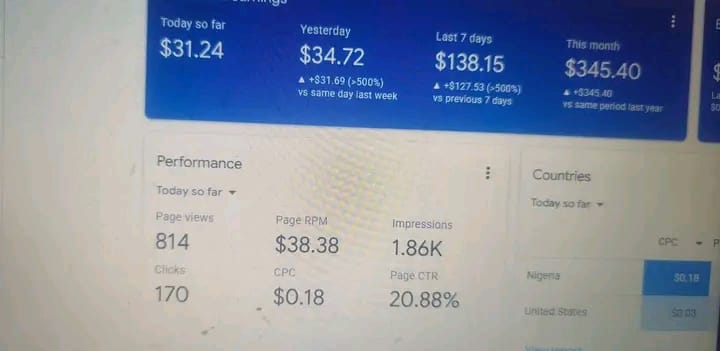
Nigerian traffic tends to earn lower RPM than US or UK traffic. That is normal. The way around it is to grow organic traffic that includes people outside Nigeria or to create content in high-paying niches (tech, finance, software) that attract international readers. Combine AdSense with ethical affiliate links once you are stable.
Mistakes That Keep Young Nigerians Stuck
Applying with fewer than 12–15 decent posts. Using pure AI content without heavy personal editing. Ignoring the Privacy Policy. Changing the site drastically right after applying. Clicking your own ads or asking friends to click (this can get the account disabled permanently). Giving up after one rejection.
None of these are permanent barriers. They are just common early mistakes.
Can You Still Get AdSense Approval in Nigeria in 2026?
Yes.
Despite everything you may have heard on Facebook groups or YouTube, Nigerians are still getting approved every single day.
Google has never announced that they stopped approving Nigerian websites.
The problem isn’t your country.
The problem is your website.
Too many people believe there’s a secret trick to getting approved.
Some will tell you to publish exactly 30 articles.
Others will say you need six months of traffic before applying.
I’ve even seen people claim you must receive 10,000 monthly visitors first.
None of that is an official Google requirement.
Google doesn’t approve websites because they have a certain number of articles.
They approve websites that provide value.
I’ve personally seen new blogs with fewer than 20 well-written articles get approved because they looked professional, answered real questions, and offered a great user experience.
On the other hand, I’ve also reviewed websites with over 100 articles that were rejected because the content was repetitive, poorly written, or obviously created just to chase ad revenue.
Your goal shouldn’t be to impress Google with numbers.
Your goal should be to build a website that people genuinely enjoy reading.
Once you understand that, everything else starts to make sense.
Final Thoughts
Getting AdSense approval in Nigeria in 2026 is not about luck or secret codes. It is about showing Google a real site with original, useful content that someone would read even if there were no ads. Build that first. The application becomes the easy part.
Start with one clear niche. Write posts that actually help people like you. Set up the essential pages properly. Then apply when the site feels finished, not when you feel impatient.
You do not need thousands of visitors on day one. You need a site that looks like it belongs online. Once you have approval, the real work of growing traffic and earnings begins — and that is a much better problem to have.
If you follow the steps in this guide carefully, you put yourself in the group of Nigerian creators who actually get approved instead of the group that keeps applying and hoping. The difference is preparation, not magic.
Now go build the site properly. The approval will follow.
Blogger since 2019 | YouTuber | Full-Stack Developer | SEO Specialist | AI Automation Specialist
Helping businesses grow with SEO, WordPress, AI automation,
content strategy, and traffic generation.
SERVICES:
✓ WordPress Blog Setup
✓ SEO Optimization
✓ AI Automation & Workflow Development
✓ Content Writing & Blog Management
✓ YouTube Content Strategy & Growth
✓ Traffic Arbitrage Strategies